SLS 3D Printing Service Industrial Selective Laser Sintering

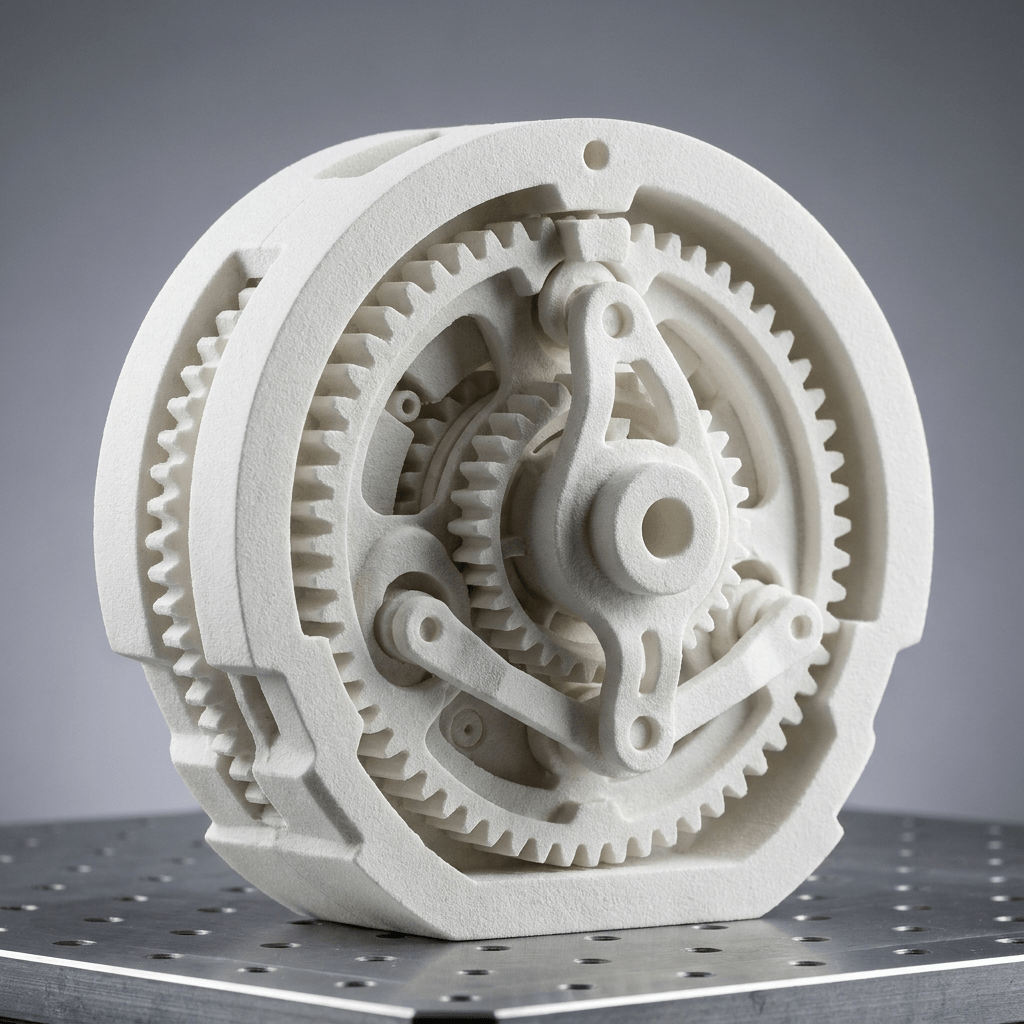
Top Proto provides production-grade selective laser sintering (SLS) 3D printing for functional nylon parts with tolerances of ±0.3 mm and mechanical properties that approach injection-molded thermoplastics. Our industrial SLS systems fuse nylon powder layer by layer using a CO₂ laser, producing fully dense parts with isotropic strength, complex internal geometries, and no requirement for support structures. SLS is the standard process for functional prototypes, end-use components, and low-to-mid volume production runs that demand real thermoplastic performance. Upload your CAD file for an instant SLS quote. Standard orders ship within 4 business days.

Get instant pricing, project lead times, and DFM feedback.

Accepted File Types: STEP, STP, SLDPRT, STL, DXF, X_T, X_B, IPT, CATPART, PRT, SAT, 3MF, JT

What Is Selective Laser Sintering (SLS)?

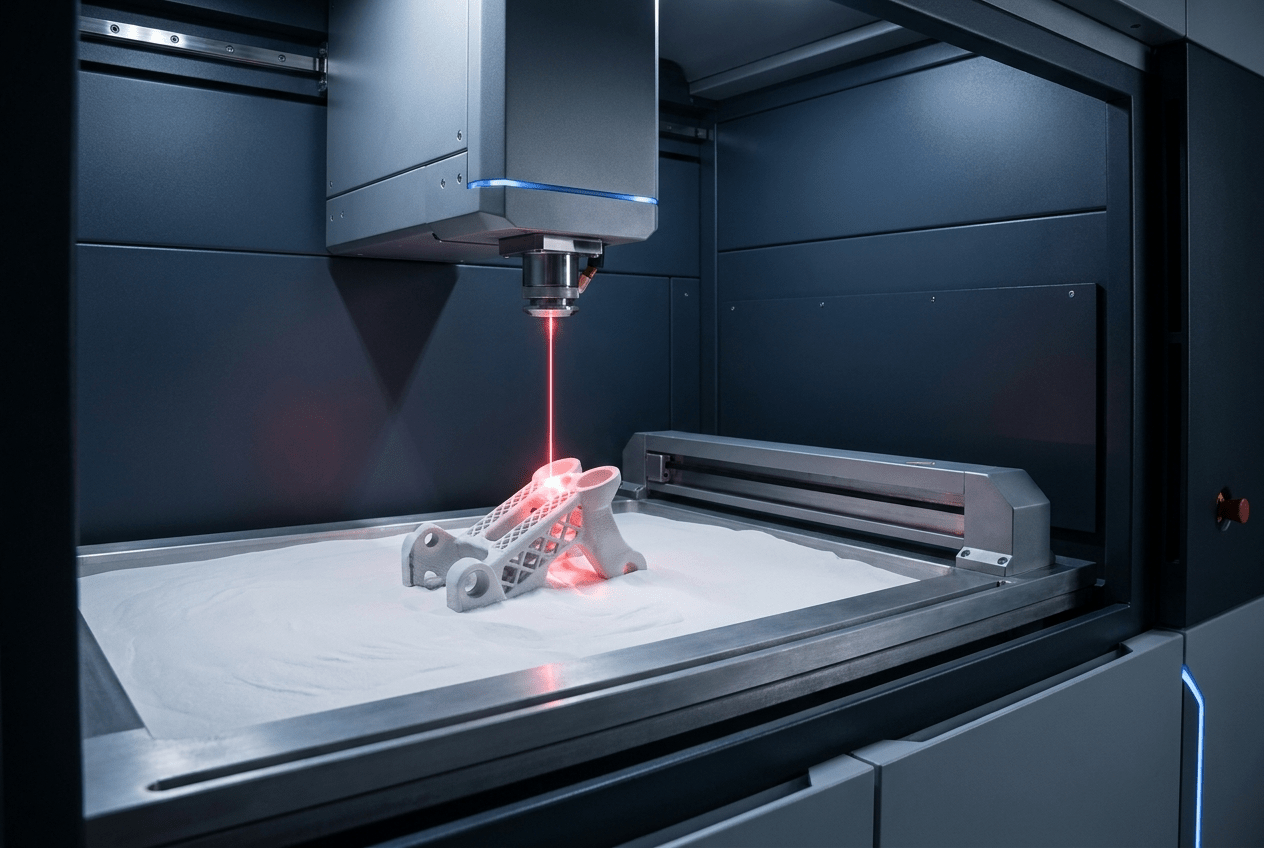
Selective laser sintering is a powder bed fusion process that builds parts by selectively fusing thermoplastic powder with a high-power CO₂ laser. Before printing begins, the entire powder bed is preheated to just below the material’s melting point, typically 170–180°C for nylon powders. A recoater blade spreads a thin, uniform layer of powder across the build platform, and the laser scans the cross-section of each part, sintering the powder particles into a solid mass.

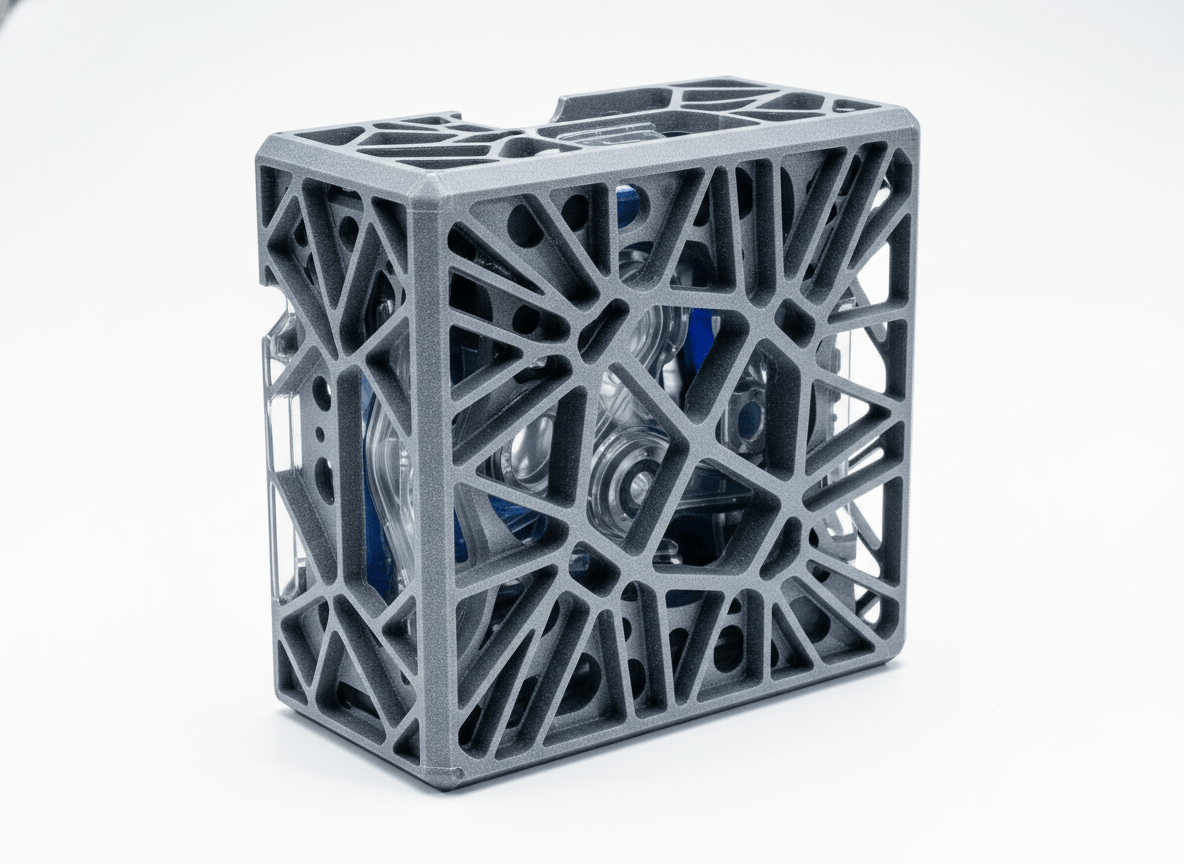
Because the surrounding unsintered powder supports each layer during the build, SLS requires no dedicated support structures. This allows complex geometries including internal channels, living hinges, interlocking assemblies, and nested components to be printed without design-for-support compromises. After printing, the build chamber cools gradually before parts are extracted and excess powder is removed through bead blasting.

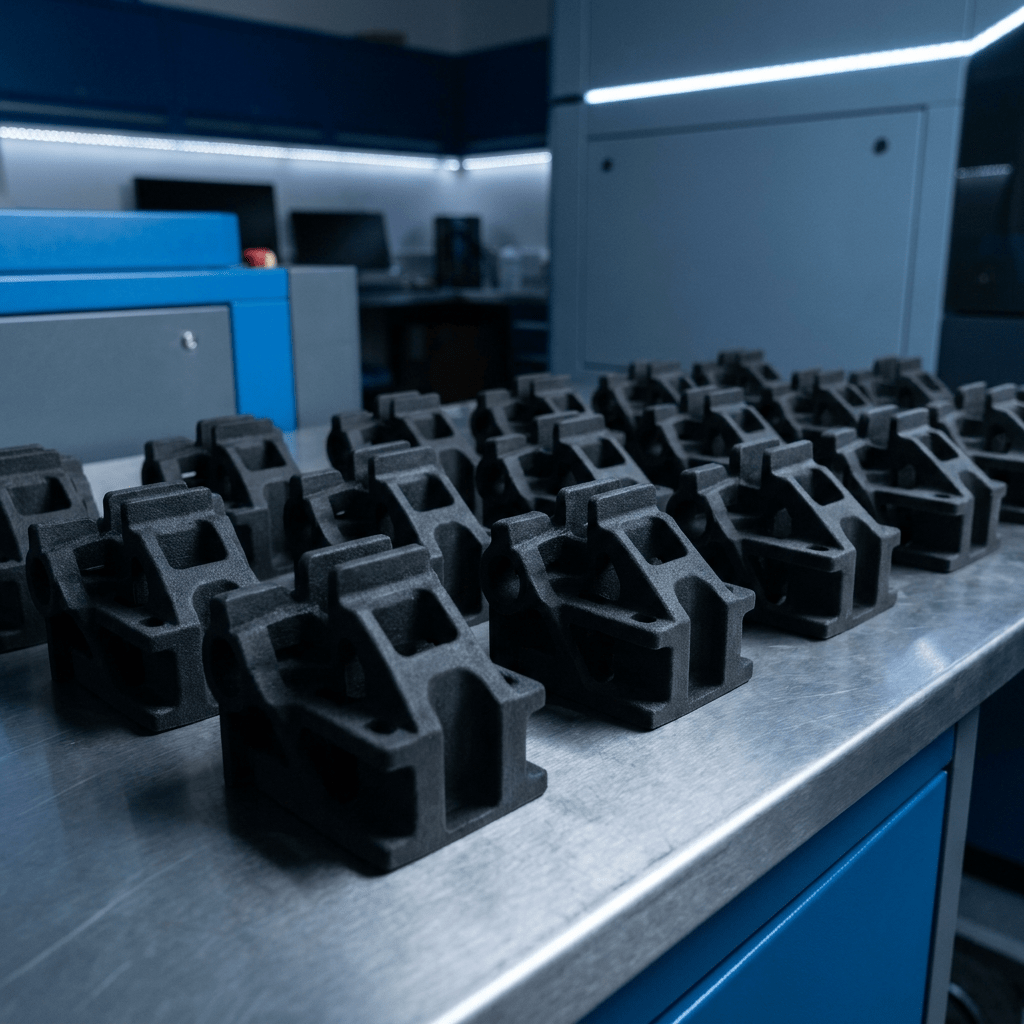
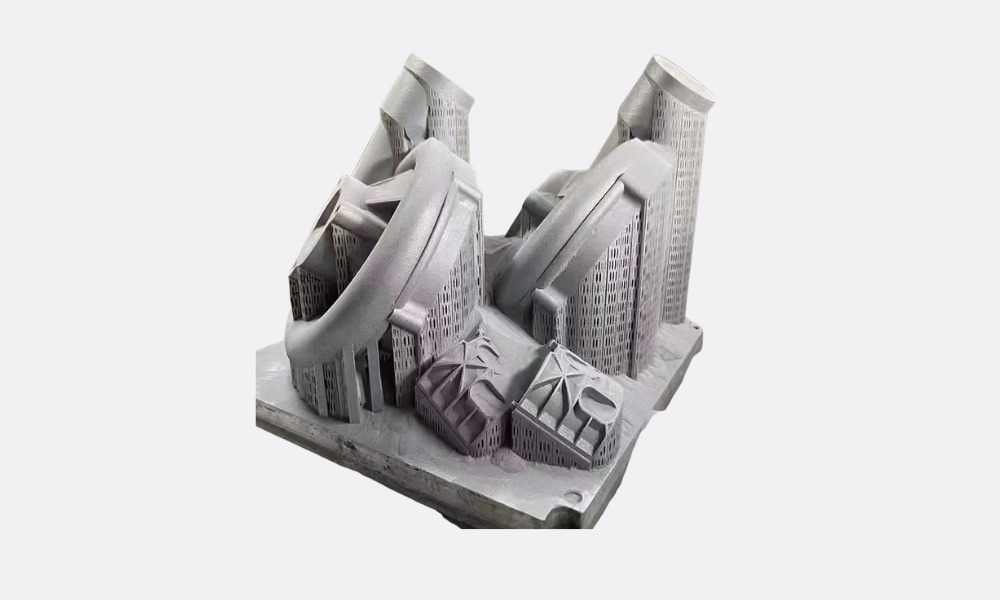
The self-supporting nature of SLS also enables dense nesting of multiple parts within a single build, maximizing throughput and reducing per-part cost for batch production.
Functional Prototyping
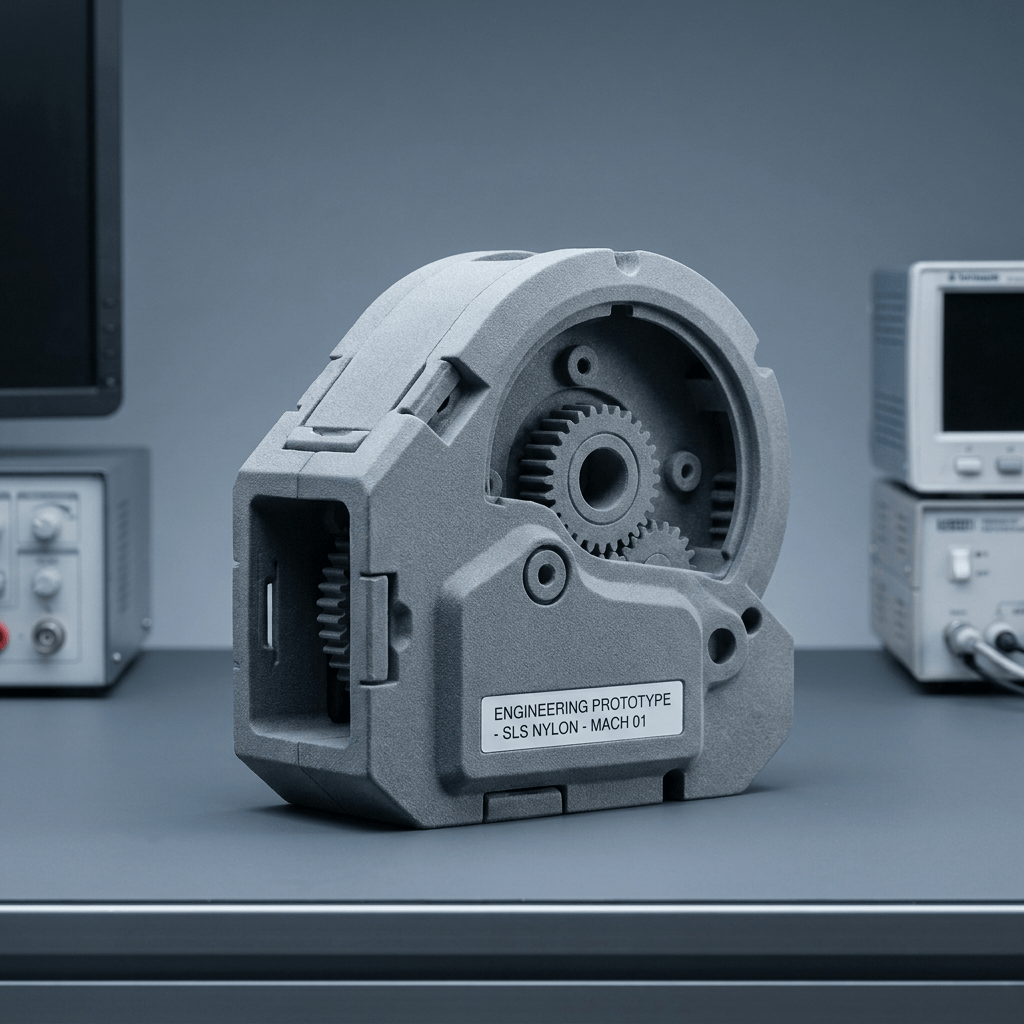
Engineering prototypes in PA12 and PA11 nylon for mechanical testing, fit verification, and assembly validation. SLS parts withstand repeated loading, snap-fit cycles, and environmental exposure.
End-Use Production Parts
Low-to-mid volume production of durable nylon components for automotive, aerospace, medical, and consumer applications. Each part maintains consistent mechanical properties across the full production run.
Complex Assemblies
Print-in-place assemblies, interlocking mechanisms, and nested components produced in a single build without assembly or fasteners. SLS eliminates tooling constraints that limit traditional manufacturing.
Jigs, Fixtures, and Tooling
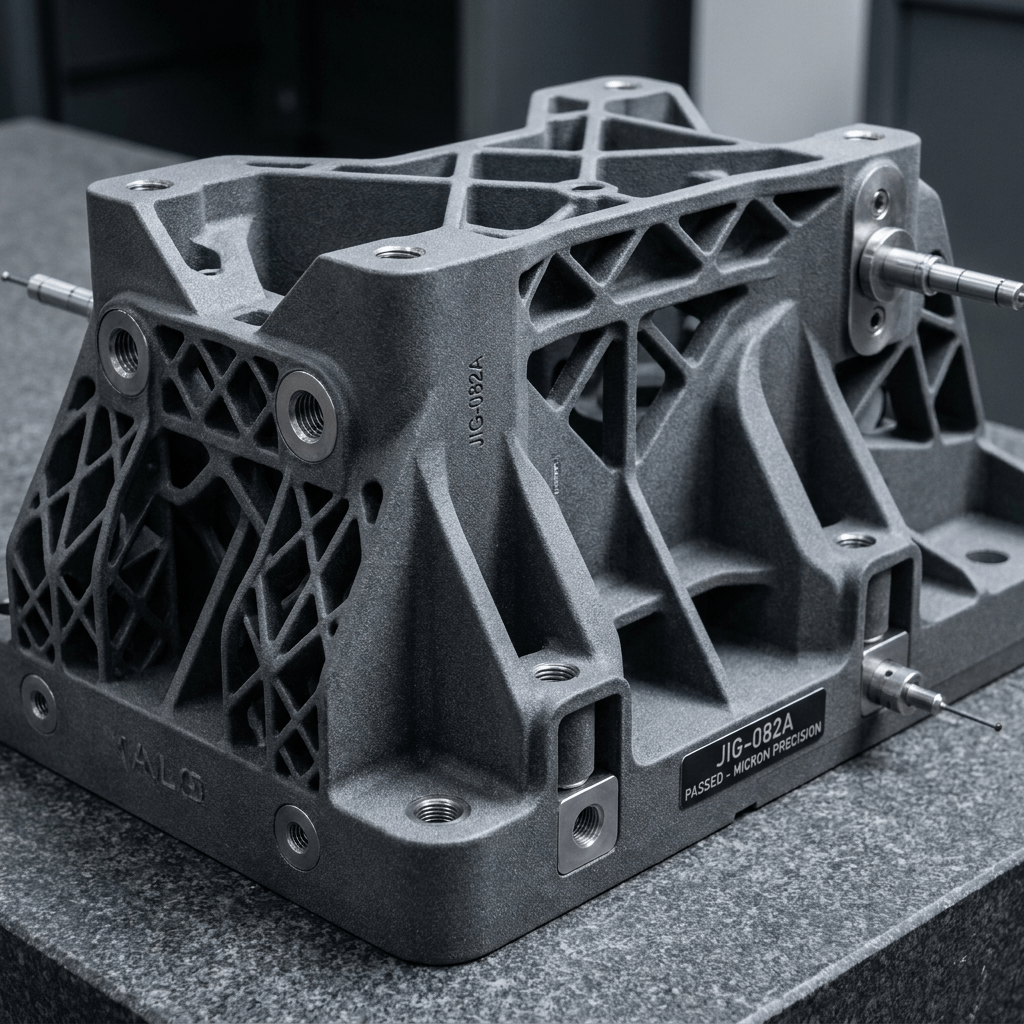
Lightweight production tooling, assembly fixtures, and inspection gauges printed in glass-filled or carbon-fiber-reinforced nylon for stiffness and dimensional stability on the factory floor.

Our SLS 3D Printing Services

Why Choose Top Proto for SLS 3D Printing?

No Support Structures

SLS parts are self-supporting during the build. This eliminates support removal, reduces post-processing labor, and allows complex geometries including internal channels and interlocking assemblies.

Real Thermoplastic Properties

SLS nylon parts deliver tensile strength of 48–50 MPa, elongation at break of 15–20%, and heat deflection temperatures above 170°C. These properties enable functional testing under real operating conditions.

Batch Production Ready

Dense nesting of parts within the powder bed maximizes build efficiency. A single SLS build can produce hundreds of unique or identical components simultaneously at consistent quality.

Powder Reuse Efficiency

Unsintered powder is recycled at refresh ratios of 30–50% new powder, reducing material waste and cost per part while maintaining mechanical property consistency across builds.

SLS Capabilities

Parameter

Specification

Technology

Powder Bed Fusion (CO₂ Laser)

Build Volume (Max)

380 × 330 × 460 mm

Layer Thickness

80 – 150 μm

Tolerance (Standard)

±0.3 mm or ±0.3% (whichever is greater)

Minimum Wall Thickness

1.0 mm (1.5 mm recommended for structural)

Minimum Feature Size

0.8 mm

Surface Finish

Ra 6 – 12 μm (as-printed, bead-blasted)

Post-Processing

Bead blasting, vapor smoothing, dyeing, painting, CNC finishing

File Formats

STL, STEP, IGES, OBJ, 3MF

SLS Part Gallery

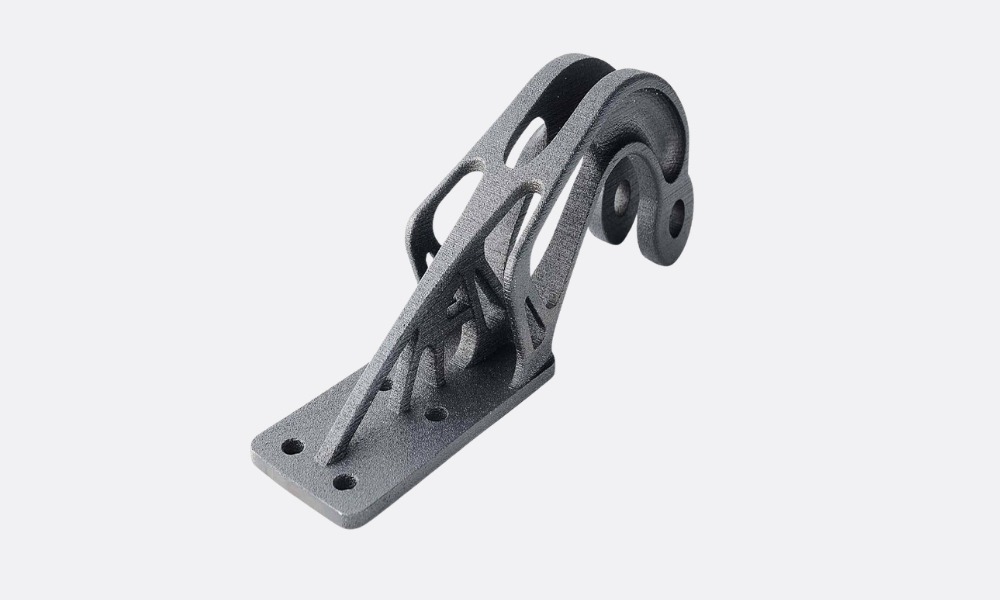
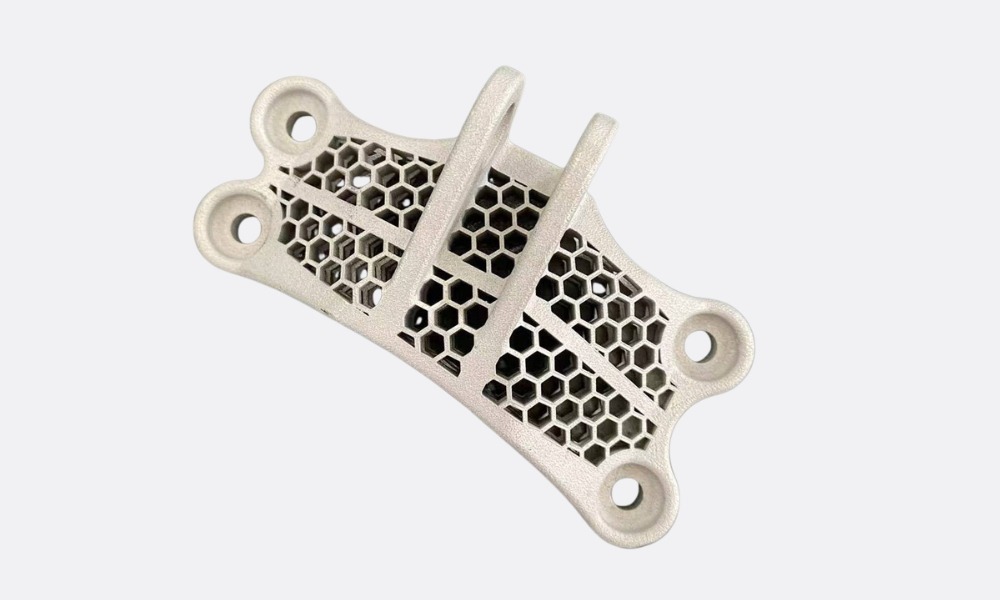
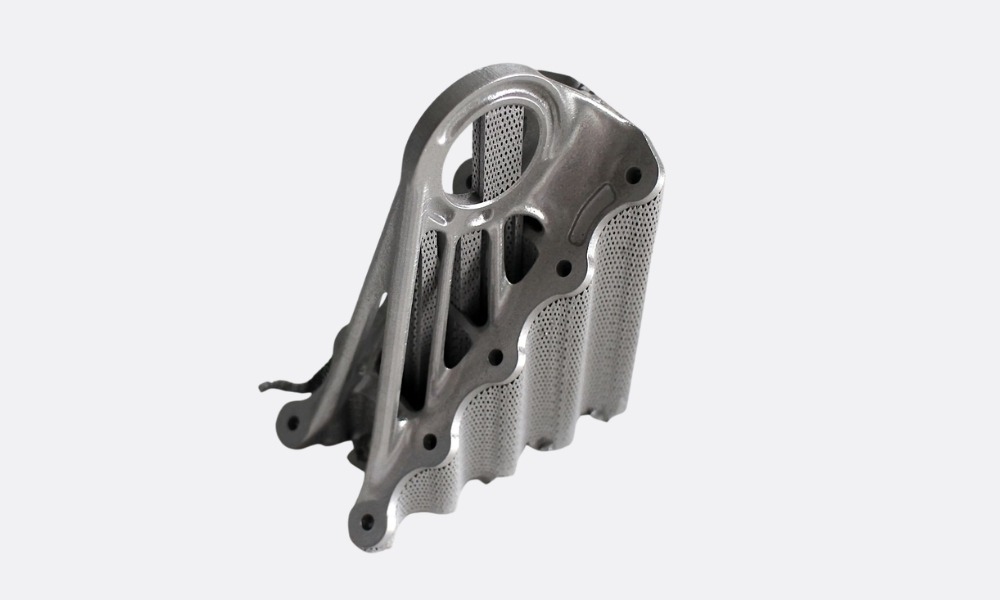
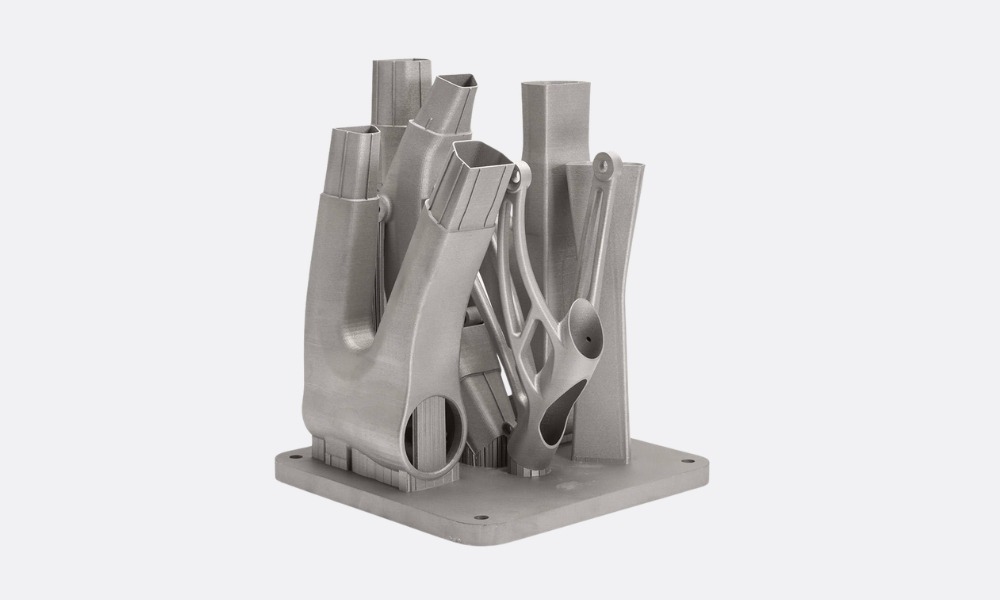
Our SLS portfolio includes automotive air duct assemblies with integrated snap-fit connections, drone structural frames in carbon-filled nylon, medical device housings that passed biocompatibility testing, and production batches of 500+ consumer product clips manufactured in a single build cycle. Each project demonstrates the mechanical performance and geometric freedom that make SLS the process of choice for functional thermoplastic parts.

SLS for Rapid Tooling

SLS nylon parts serve as functional tooling for short production runs. Glass-filled PA12 provides the stiffness and thermal resistance needed for assembly jigs, inspection fixtures, and thermoforming bucks. Because SLS requires no tooling itself, replacement fixtures can be reprinted and deployed within days rather than the weeks required for machined aluminum tooling.

SLS for Production Tooling

For bridge-to-production and low-volume manufacturing, SLS delivers parts with mechanical properties within 80–90% of injection-molded equivalents. This performance level supports production use in non-safety-critical applications while steel tooling is being manufactured, reducing time to market by 4–8 weeks. Parts can be CNC post-machined on critical interfaces to achieve tolerances below ±0.05 mm where required.

Frequently Asked Questions SLS 3D Printing

Standard SLS tolerances are ±0.3 mm or ±0.3% of the nominal dimension, whichever is greater. For critical features requiring tighter control, CNC post-machining can achieve tolerances below ±0.05 mm.
No. The unsintered powder surrounding each layer acts as a natural support during the build. This means complex geometries including internal channels, overhangs, and interlocking components print without dedicated supports.
PA12 SLS parts achieve tensile strength of approximately 48–50 MPa with 15–20% elongation at break. These values approach those of injection-molded nylon and are suitable for functional testing and end-use applications.
The minimum printable wall thickness is 1.0 mm for PA12 and PA11. Structural walls carrying mechanical loads should be 1.5–2.0 mm minimum to avoid warping during cooling.
Yes. SLS is widely used for low-to-mid volume production runs, bridge manufacturing, and mass customization. Parts maintain consistent mechanical properties across builds, and quality can be verified through standard inspection methods.

CNC Manufacturing Resources

Technical guides and process comparisons from the Top Proto engineering team, covering material selection, process decision frameworks, and manufacturing design principles for engineers and product developers.